
Part 3 of 3 in the "1984 → 2048: Europe's Choice" trilogy
Denmark's Justice Minister stood at a podium in Copenhagen and said the quiet part out loud:
"We must break with the totally erroneous perception that it is everyone's civil liberty to communicate on encrypted messaging services."
Read that again. A sitting European minister, not Chinese, not Russian, European, declared that private communication is not a fundamental right.
This is not the warning. This is the event the warning was about.
In 1984, O'Brien is the Inner Party member who tortures Winston into loving Big Brother. He doesn't hide what the Party is. He explains it: "We are not interested in the good of others; we are interested solely in power."
Peter Hummelgaard is Europe's O'Brien. And unlike Orwell's fiction, he's real, he's in power, and he's telling you exactly what he intends to do.
In Part 1, we mapped the three digital superstates. In Part 2, we documented how Europe is being besieged. Now comes the question that matters: Is there a fourth way, or will Europe become the thing it claims to oppose?
Europe possesses something Winston Smith never had: democratic institutions that still function, regulatory power that still bites, and 450 million citizens who can still choose. The question is not whether resistance is possible. The question is whether Europe will use what it has, or whether it will build the surveillance state itself.
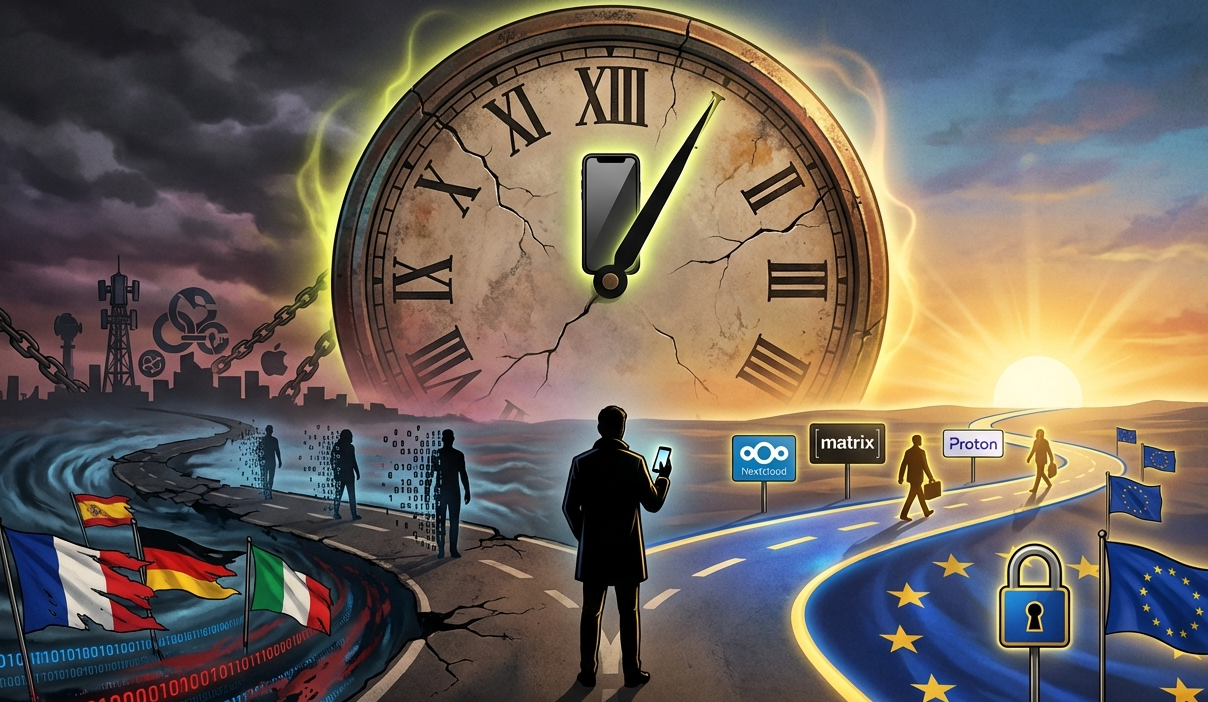
The clock is striking thirteen. The hour is not yet lost. But the chimes are coming from inside the house.
Europe's resistance: what Winston couldn't have
In 1984, there is no resistance. The Brotherhood turns out to be a Party fiction. Emmanuel Goldstein may not exist. The proles are kept too ignorant and entertained to revolt. Hope is an illusion the Party manufactures to identify dissidents.
Europe in 2026 is not Oceania. Not yet.
What Winston Smith couldn't have
Winston had nothing. Europe has everything it needs, if it chooses to use it.
Democratic institutions: flawed but real
Winston lived under a one-party state where elections were theater and courts were instruments of terror. Europeans live under democracies where governments can be voted out, where courts can strike down surveillance laws as the ECJ did with the Data Retention Directive. Citizens can sue corporations and win, as Max Schrems did against Facebook, twice. Regulators can impose billion-euro fines, as with Meta's €1.2 billion GDPR penalty in 2023.
These institutions are imperfect. They are slow. They are sometimes captured by the interests they should regulate. But they exist, and that existence is the difference between 1984 and 2026.
Regulatory power: the Brussels Effect
Europe has something no other bloc possesses: the power to set global standards through market access. The "Brussels Effect" means that companies wanting access to 450 million consumers must comply with European rules, and often apply those rules globally rather than maintain separate systems.
This power has already reshaped the digital world. The GDPR of 2018 forced global privacy policies to improve; California's CCPA and Brazil's LGPD follow its model. The Digital Services Act of 2024 requires platforms to address illegal content, algorithmic transparency, and researcher access. The AI Act, also 2024, became the world's first comprehensive AI regulation, banning social scoring, restricting facial recognition, and requiring transparency for high-risk systems. The Digital Markets Act forces Big Tech "gatekeepers" to open their platforms, allow interoperability, and stop self-preferencing.
The superstates can lobby against these regulations. They can threaten retaliation. They can delay compliance. But they cannot ignore a €17 trillion market. Europe's regulatory power is sovereignty in action.
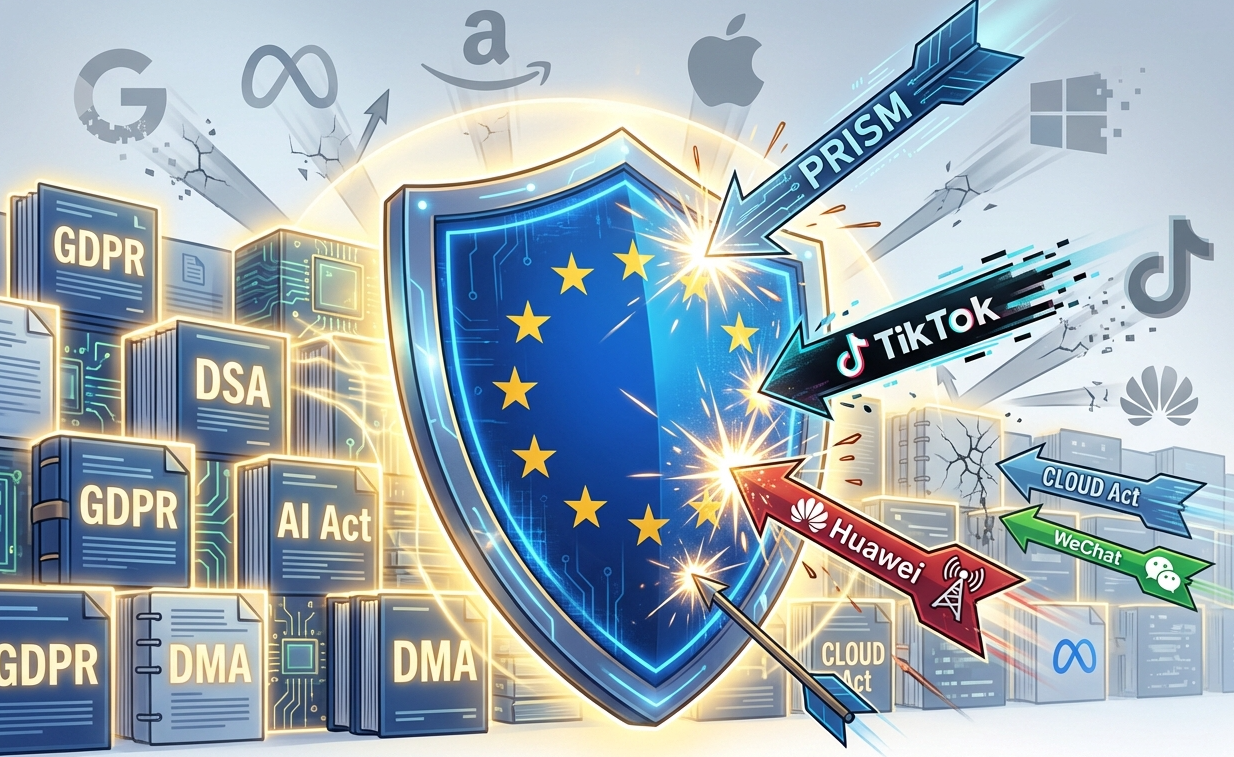
450 million people, €17 trillion economy
Winston was alone. Europe is not.
The European Union represents 450 million people, larger than the United States. Its €17 trillion GDP makes it the world's third-largest economy. A market large enough to set global standards, if it chooses to, with unified regulations, free movement, and a shared currency for most members.
This is not a small nation that can be bullied into compliance. This is a bloc that can, if it chooses, build its own infrastructure, set its own standards, and chart its own course. The question is not capability. It is will.
Citizens are waking up
In 1984, Winston writes: "If there is hope, it lies in the proles." But the proles never organize. European citizens already have.
Privacy as a value, not just regulation
GDPR did not emerge from bureaucratic void. It emerged from decades of European privacy activism, from the memory of surveillance states both Nazi and Communist, from a cultural understanding that privacy is not "having something to hide" but having the right to a self that is not observed, measured, and monetized.
Recent surveys show this consciousness growing. 45% of European organizations increased their interest in digital sovereignty solutions between 2024 and 2025. Nextcloud reports a threefold increase in requests for sovereign cloud alternatives.
Open source as resistance
The Party controlled all technology. Europeans can build their own.
European open source projects are creating alternatives to every major American platform. Nextcloud in Germany offers self-hosted cloud storage, collaboration, and office suite capabilities, now used by the German federal government, French ministry of education, and thousands of European organizations. Matrix provides a decentralized, encrypted messaging protocol adopted by the French government, German armed forces, and NATO for secure communications. PeerTube from France offers federated video hosting with no tracking, no ads, and no algorithmic manipulation. Mastodon, also German, provides a decentralized social network where federated servers mean no single point of control or failure.
These are not toys. They are production-ready alternatives used by governments and enterprises. They prove that sovereignty is technically possible. The only question is adoption.
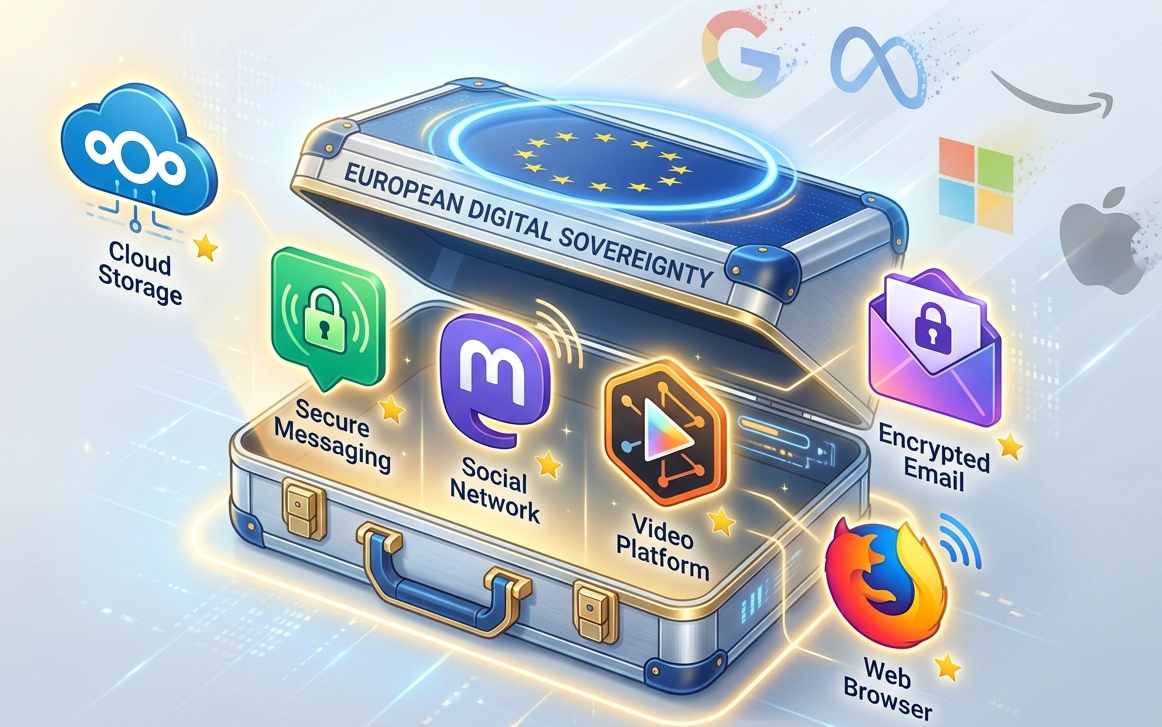
Citizens demanding change
The Party suppressed all dissent. European civil society fights back.
European Digital Rights (EDRi) coordinates a network of 44 NGOs defending digital rights across Europe. La Quadrature du Net in France successfully sued to stop algorithmic video surveillance in Grenoble. noyb (None of Your Business), Max Schrems' organization, has filed hundreds of GDPR complaints, winning landmark cases against Facebook, Google, and Amazon.
The proles in 1984 never organized. European citizens already have.
The clock strikes thirteen
The opening line of 1984: "It was a bright cold day in April, and the clocks were striking thirteen."
The impossible time signals that something is fundamentally wrong. The world looks normal (bright, cold, April) but the clocks tell a truth that conscious minds have learned to ignore.
In 2026, the clocks are striking thirteen. Most Europeans don't notice.
Warning signs we're ignoring
Facial recognition: banned in theory, spreading in practice
The AI Act prohibits live facial recognition in public spaces from February 2025. But the exceptions swallow the rule: law enforcement can use it for victims, terrorists, and serious crime suspects. Critics warn these exceptions are "very vague." Diego Naranjo of European Digital Rights calls it "the normalisation of mass surveillance."
"Nothing to hide" as accepted truth
The Party's greatest victory was making citizens police themselves. The modern equivalent: "If you have nothing to hide, you have nothing to fear."
This inverts the presumption of innocence. It assumes surveillance is neutral, that only the guilty need privacy, that watchers never abuse power.
History screams otherwise. The Stasi files showed how "ordinary" surveillance destroyed lives. The NSA's LOVEINT scandal revealed analysts spying on love interests.
Chat Control: the test case
We opened this article with Hummelgaard's declaration. Now consider what it means in practice.
The Chat Control proposal would mandate scanning of all private digital communications, including encrypted messages. The technical mechanism, "client-side scanning," would require messaging apps like Signal, WhatsApp, and Telegram to scan content before encryption, effectively creating a backdoor into every private conversation.
The Signal Foundation threatened to leave the EU market rather than comply. Intelligence agencies warned against it. The UN emphasized that undermining encryption would breach privacy rights.
| Superstate | Justification | Method |
|---|---|---|
| China | "Social stability" | Great Firewall, mandatory backdoors |
| Russia | "National security" | RuNet, SORM surveillance |
| USA | "Fighting terrorism" | PRISM, Section 702, CLOUD Act |
| EU (Chat Control) | "Protecting children" | Client-side scanning, encryption backdoors |
The justification changes. The surveillance is identical.
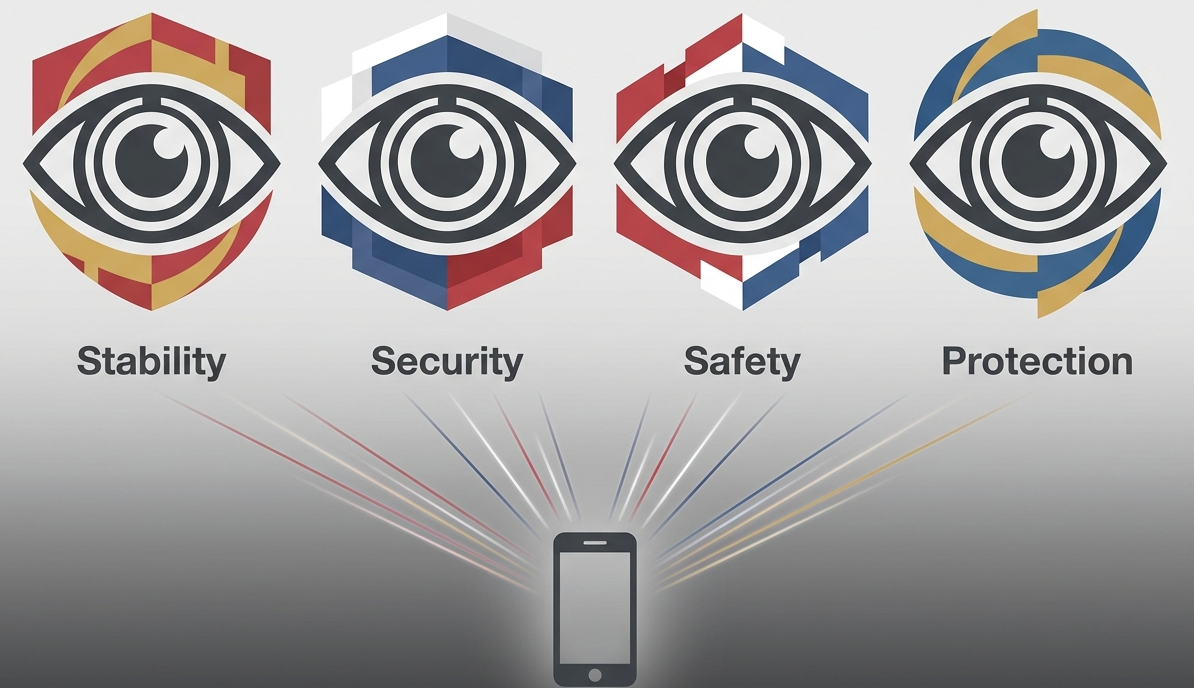
Germany ultimately voted against. Public pressure forced Denmark to drop mandatory scanning in late 2025. But the proposal continues toward final negotiations with "voluntary" scanning requirements that critics warn will become mandatory.
The fourth way cannot be built on surveillance. The moment Europe breaks encryption "for the children," it loses the moral authority to criticize America for breaking it "for terrorism" or China for breaking it "for stability." Privacy is not divisible. Backdoors are backdoors. Once built, they will be exploited.
What happens if Europe fails
Forget 2084. What does 2030 look like if Chat Control passes?
- Every photo you send is scanned before encryption
- Every message is analyzed by AI that flags "suspicious" content
- Your encrypted conversation with your lawyer? Not encrypted anymore
- Signal leaves the EU market; you use whatever compromised app remains
- The infrastructure exists, and the next government, or the one after that, will find new reasons to use it
Once built, surveillance infrastructure doesn't get dismantled. It gets expanded. It gets normalized.
The path to absorption runs through the next five years.
The final line of 1984: "He loved Big Brother."
Winston Smith's defeat was total, not because the Party broke his body, but because it conquered his mind.
Orwell imagined totalitarianism would require torture. The platforms discovered it only requires dopamine.
"We needed to sort of give you a little dopamine hit every once in a while," confessed Sean Parker, Facebook's founding president. "It's a social validation feedback loop... exploiting a vulnerability in human psychology."
The Party used pain. The platforms use pleasure. The algorithm hijacks reward circuits with variable rewards, the same mechanism that makes slot machines addictive. Every notification is a pull of the lever.
The Party had to build a surveillance state. We crowdfunded ours through app purchases.
Big Brother doesn't need a telescreen on your wall. You bought one, put it in your pocket, and check it 150 times a day.
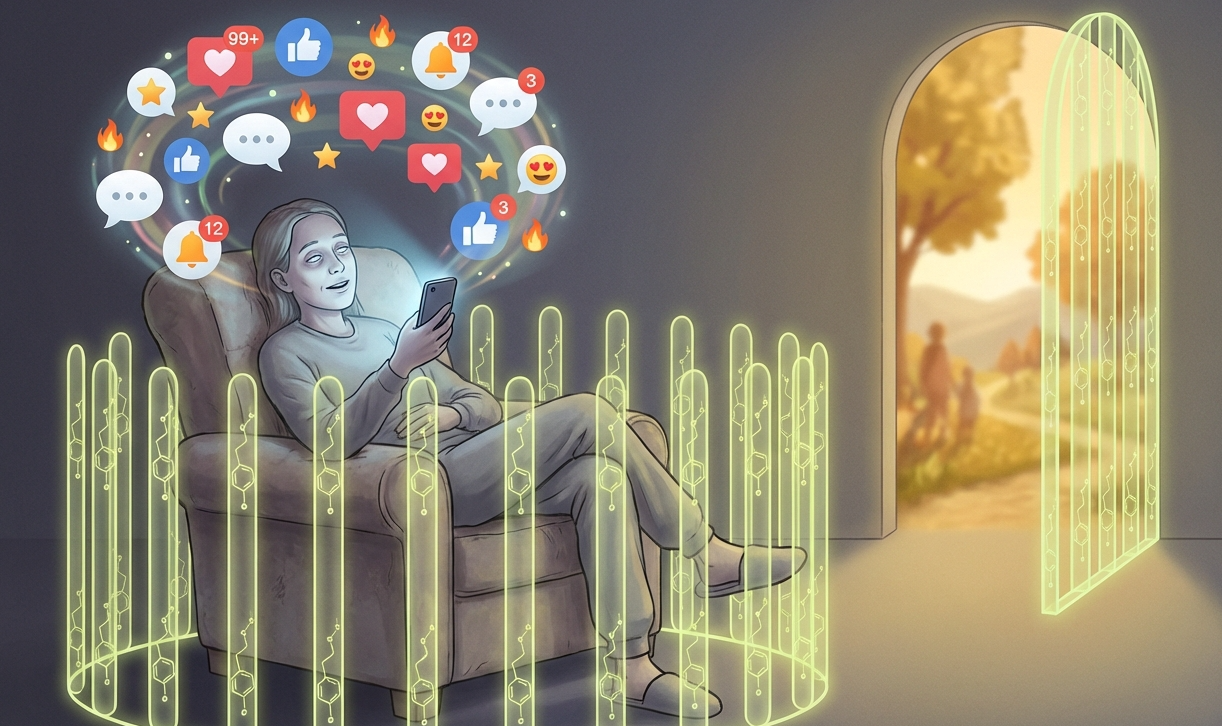
The superstates didn't conquer Europe's minds through invasion. They're doing it one dopamine hit at a time.
What you can do
Winston Smith had no options. You do.
Switch your tools:
- Email: ProtonMail or Tuta (European, encrypted)
- Cloud storage: Nextcloud (European, self-hostable)
- Messaging: Signal (while it lasts in Europe) or Element/Matrix
- Search: Ecosia or Qwant (European alternatives)
- Browser: Firefox (nonprofit, privacy-focused)
Demand action:
- Contact your MEP about Chat Control: europarl.europa.eu/meps
- Support digital rights organizations: EDRi, noyb, La Quadrature du Net
- Ask your employer: Where is our company data stored? Who can access it? What's our plan for digital sovereignty?
Stay informed:
- Follow the Chat Control negotiations at chatcontrol.eu
- Read the EFF's surveillance coverage
- Support independent European tech journalism
The superstates are forming. The perpetual war is already underway, fought not with bombs but with algorithms, not for territory but for attention, not for bodies but for minds.
The question is whether Europe will be a player or a province. A civilization or a colony. A fourth way or a footnote.
In Orwell's world, the clock struck thirteen and nobody noticed.
In our world, we can still hear the chimes, if we can tear ourselves away from our screens long enough to listen.
The clock is striking. Will you keep scrolling?
Series context
Position: Part 3 of 3 in "1984 → 2048: Europe's Choice" trilogy
Previous: 1984 → 2048: Europe Under Siege (Part 2)
Next: —
This concludes the "1984 → 2048: Europe's Choice" trilogy.
